
Home
STORIES SHORTS MORE

The Magic of 11°: Why Ducati’s Versatile Twin Feels Faster Than It Looks

Mohammed Bilal Avatar

Mohammed Bilal

Published: December 29, 2025

Share:
Ducati Testastretta 11° engine

In the world of high-performance motorcycles, engine names usually revolve around displacement or cylinder count. Ducati, however, does things differently. One of its most important engines isn’t defined by cubic capacity alone—but by a number that completely changes how it behaves on the road: 11°.

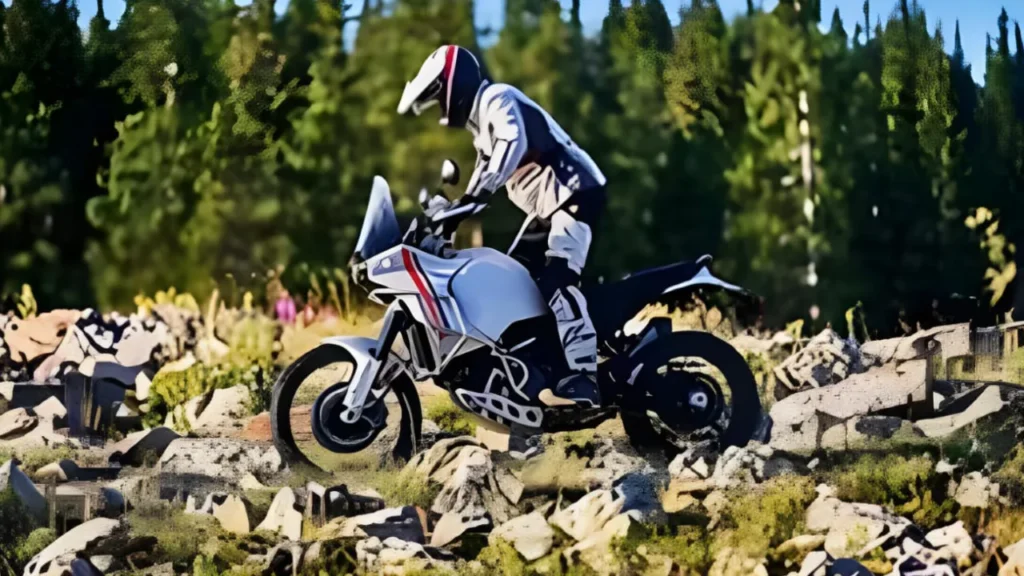
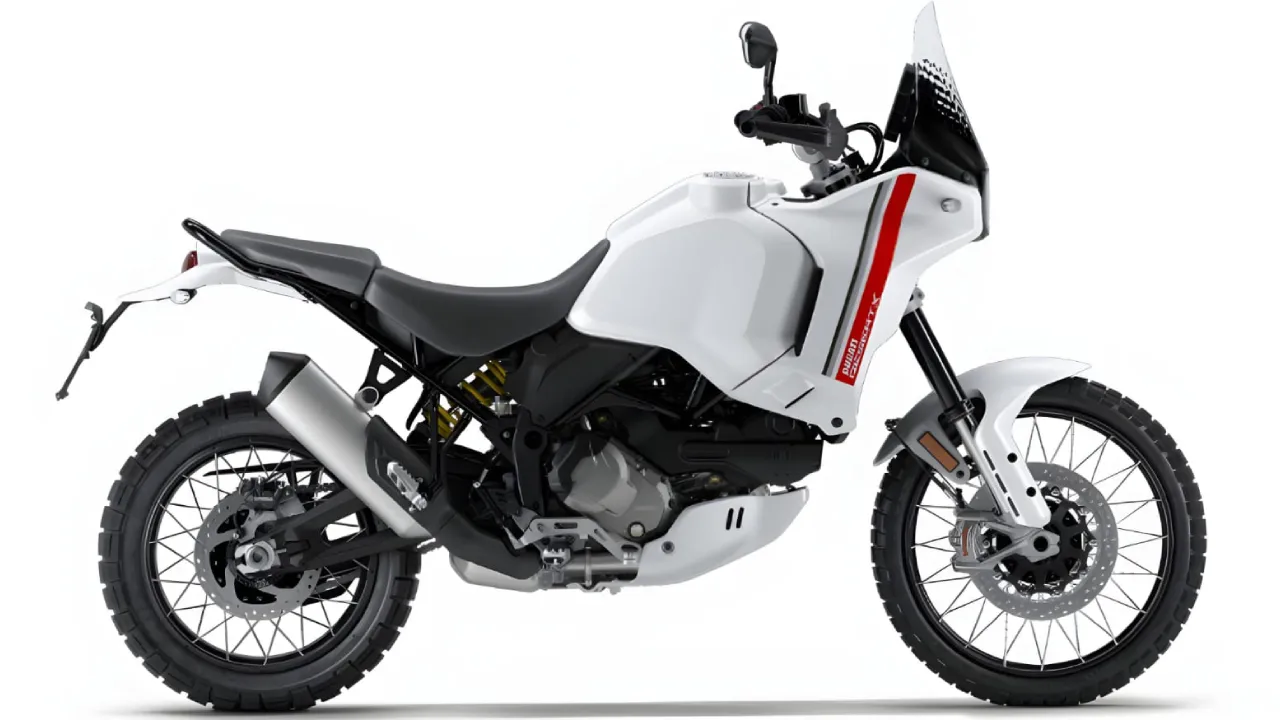
The Ducati Testastretta 11° engine is the backbone of some of the brand’s most versatile motorcycles, including the Ducati DesertX, Ducati Monster, and Ducati Multistrada V2.

On paper, it’s a 937cc liquid-cooled L-twin producing around 110 bhp. In the real world, though, it often feels quicker, stronger, and more usable than engines with far higher peak outputs. The secret lies in that small but crucial number.

Ducati Testastretta 11° engine

What Does “11°” Actually Mean?

The “11°” in Testastretta 11° refers to valve overlap, not cylinder angle or ignition timing.
Read Also

Understanding Valve Overlap

In a four-stroke engine, there’s a brief moment when both intake and exhaust valves are open at the same time. This is called valve overlap.

  • High overlap (around 41° in older Ducati superbike engines)
    Perfect for racing at high rpm. Exhaust gases help pull fresh air-fuel mixture into the cylinder, improving top-end power. The downside? Poor low-speed manners, rough throttle response, and jerky behaviour in traffic.
  • Low overlap (11°)
    By drastically reducing overlap, Ducati ensures far less fresh mixture escapes through the exhaust at low rpm. The result is smoother combustion, cleaner throttle response, better fuel efficiency, and far more control at everyday speeds.

This single change is what transforms a sharp-edged superbike engine into something you can comfortably ride every day.
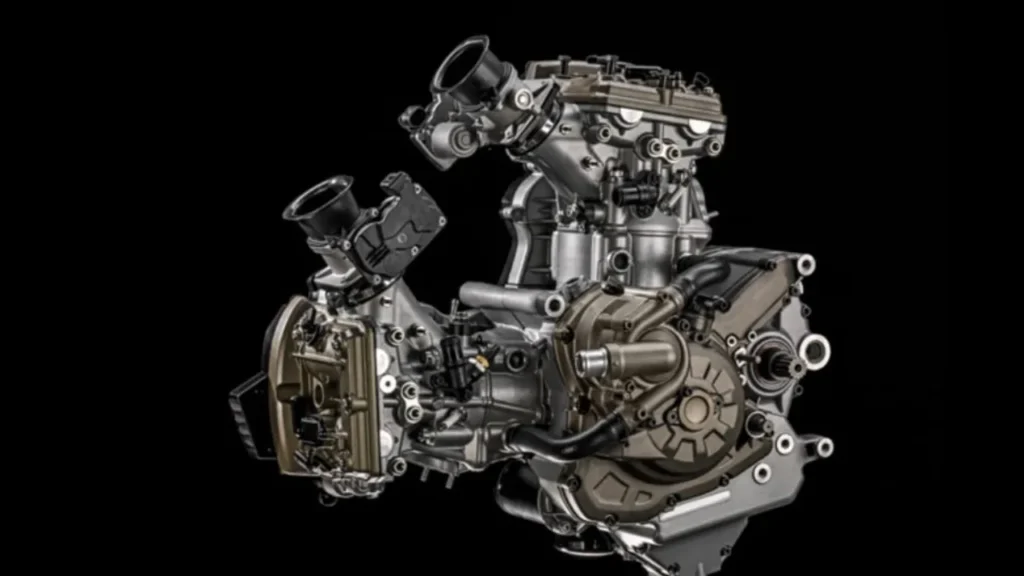
Ducati Testastretta 11° engine

How It Feels on the Road (and Off It)

The Testastretta 11° is a masterclass in balance.
At low speeds—whether you’re crawling through traffic on a Monster or negotiating technical trails on a DesertX—the engine feels calm, predictable, and cooperative. There’s no hunting, no sudden surges, and no need to constantly slip the clutch.

But twist the throttle harder, and the Ducati DNA comes rushing back.

Thanks to the brand’s signature desmodromic valve system—where valves are mechanically opened and closed without springs—the engine remains eager to rev. Power builds in a strong, linear wave, delivering real-world pace that often feels more immediate than peaky, high-horsepower rivals.

In short, it’s not explosive. It’s relentlessly effective.

Continuous Evolution: Lighter, Smoother, Better

Ducati hasn’t stood still with the Testastretta 11°. Recent updates, especially on models like the DesertX, focus on refinement and weight reduction.

Key Mechanical Improvements

  • New lightweight 8-plate clutch
    More compact and noticeably lighter at the lever—especially useful in city riding and off-road conditions.
  • Reduced internal friction
    The gear selector drum now runs on bearings, resulting in cleaner, more precise gear shifts.
  • Weight savings
    These changes shave around 1.7 kg off the engine, improving agility and overall ride feel.

These might sound like small tweaks, but together they make the bike feel sharper, easier to control, and more “alive” in real-world riding.
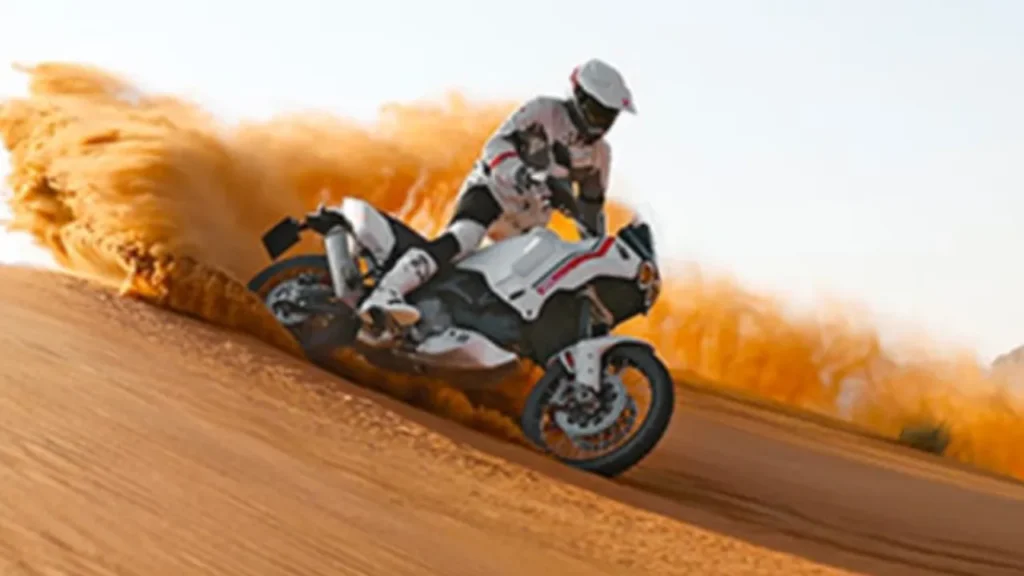
Ducati Testastretta 11° engine

GadiGarage Verdict

The Testastretta 11° may well be Ducati’s most important modern engine. It solves the classic superbike problem—massive performance that’s difficult to use—by blending race-bred engineering with everyday usability.

It has the soul of a Ducati racer, but the manners of a well-trained all-rounder. Whether you’re commuting, touring, carving mountain roads, or tackling dirt trails, this engine adapts without losing its character.

So, what’s your take — do you miss the raw, edgy aggression of Ducati’s old high-overlap twins, or do you prefer the refined, real-world precision of the Testastretta 11°? Tell us your thoughts in the comments below!
- NEXT POST -

India’s Two-Wheeler Industry Crosses 2 Crore Milestone in 2025

Mohammed Bilal Avatar

Mohammed Bilal

Published: January 15, 2026

Share:
India’s Two-Wheeler

The Indian two-wheeler (2W) industry has scripted a strong comeback in calendar year 2025. For the first time since the pandemic slowdown, domestic sales have crossed the 2 crore (20 million) mark, closing the year at approximately 20.50 million units.

This translates to a 4.9%–7% year-on-year growth, depending on whether registration or dispatch data is considered. While still marginally below the all-time peak of 21 million units in 2018, the industry has clearly entered a fresh growth cycle heading into 2026.

1. Domestic Sales: A Policy-Led Recovery

The biggest turnaround came in the second half of 2025, driven largely by GST 2.0 reforms.

GST 2.0 Impact

  • GST on motorcycles and scooters up to 350cc reduced from 28% to 18%
  • Improved affordability for middle-class and first-time buyers
  • Immediate price correction across commuter and premium segments
  • Urban Growth Leads: Cities and tier-2 towns drove most of the volume
  • Scooters Grow Faster: Scooter demand grew quicker than motorcycles in urban markets
  • Festive Record: October–December (Q3) became the strongest quarter ever, with 5.70 million units sold
  • Rural Stability: Good monsoons and farm income kept rural demand steady, though urban India led growth
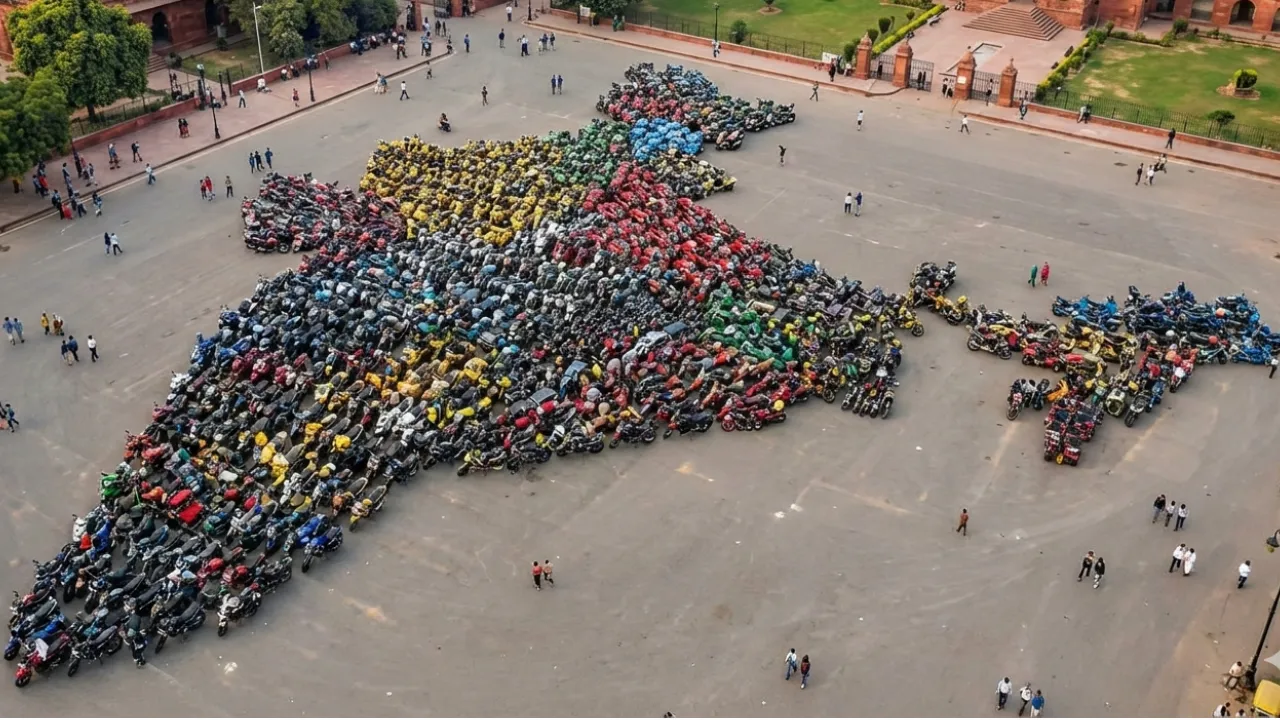
India 2 wheelers

2. Exports: India’s Global Two-Wheeler Boom

Exports were the standout performer of 2025.

Export Highlights

  • 4.94 million units exported – an all-time high
  • 24.2% year-on-year growth
  • Strong recovery in:
    • African markets
    • South Asia
    • Latin America

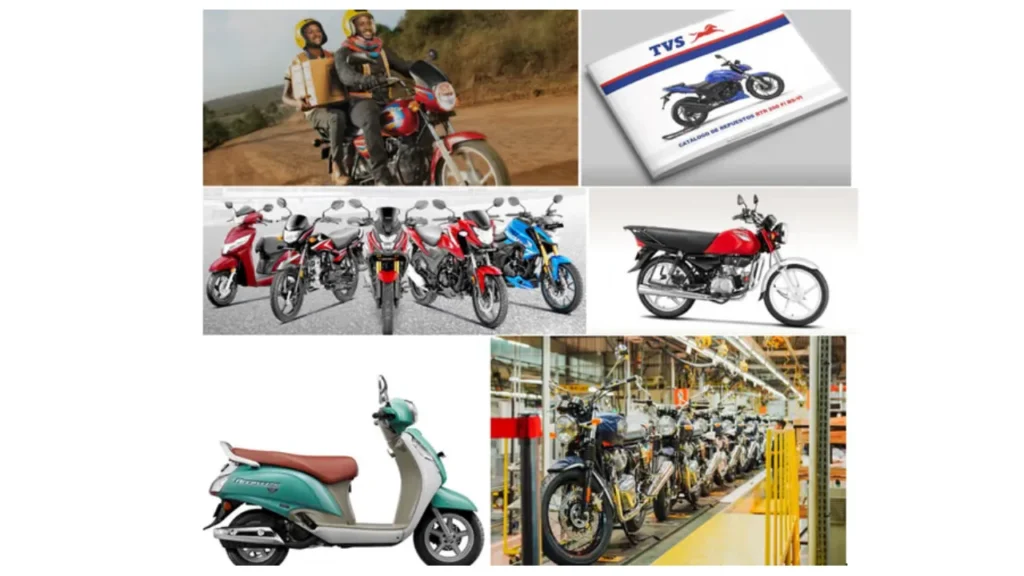
India continues to strengthen its position as the global hub for affordable motorcycles and scooters.

3. Brand-Wise Snapshot: Winners & Momentum

Manufacturer2025 VolumeMarket Status
Hero MotoCorp57.5 lakhMarket leader; modest ~2% growth
TVS Motor Co.39.8 lakhFastest growth at 15.7%
Honda (HMSI)Gap with Hero widened to 8.51 lakh units
Royal Enfield10+ lakhExpected to cross 1 million annual sales
SuzukiStrong double-digit growth (Access, Burgman)

TVS emerged as the growth champion, while Royal Enfield continued to dominate the mid-capacity premium segment.

4. Major Market Shifts in 2025

Move Beyond 110cc

  • Strong pivot toward 125cc+ motorcycles
  • Premium scooters gained traction in cities

Alternative Fuels & Convenience

  • Growing interest in CNG two-wheelers
  • Automatic and AMT-style convenience becoming more important

Premiumisation Trend

  • Rising demand for:
    • Adventure motorcycles
    • 300cc–500cc middleweights
  • Market gradually moving away from pure “commuter-only” focus

2026 Outlook: Can India Beat the 2018 Record?

With:

  • Strong export momentum
  • Expected repo rate cuts
  • Income tax relief boosting disposable income
  • Multiple EV and ADV launches lined up

2026 could finally see India surpass its 2018 peak of 21 million two-wheelers.

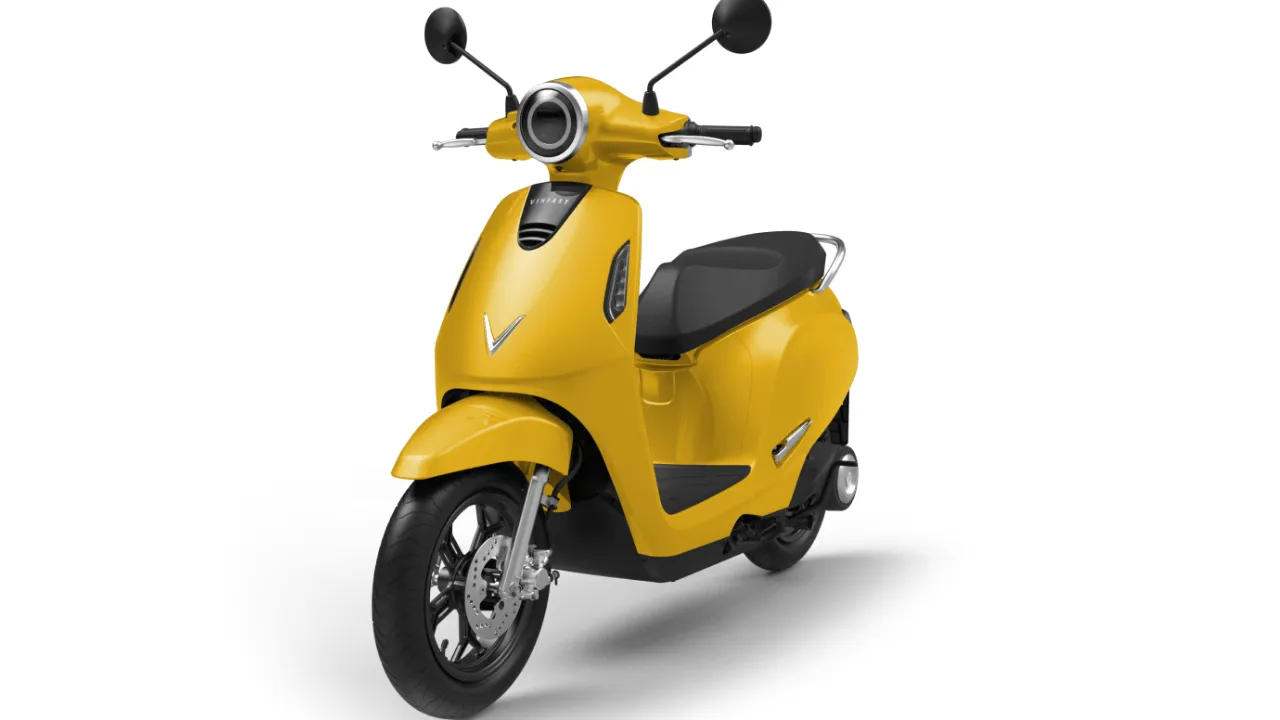
Entry-level electric scooters and premium motorcycles are expected to be the biggest growth drivers going forward.

GadiGarage Verdict

Crossing 2 crore two-wheeler sales isn’t just a recovery milestone — it signals a structural reset for the Indian market. With better pricing, stronger exports, and shifting buyer preferences, the industry is entering a healthier, more diversified phase.

So, what are you watching in 2026 — electric scooters finally overtaking 110cc commuters, or the continued rise of premium motorcycles?
Tell us your thoughts in the comments below!
- NEXT POST -

Loading more posts...